
Healthcare Revenue Cycle Management (RCM)
Scalable and Customizable Revenue Cycle Management Services for Physician Groups and Health Systems.
-
Improving Patient Collections: Turning Financial Conversations Into Better Outcomes
Introduction: The Shift to Patient Responsibility In today’s healthcare landscape, the patient—not the payer—is now the fastest-growing source of revenue. With high-deductible plans and rising out-of-pocket costs, patient responsibility can account for 20–30% of total collections for many practices. Yet,…

-
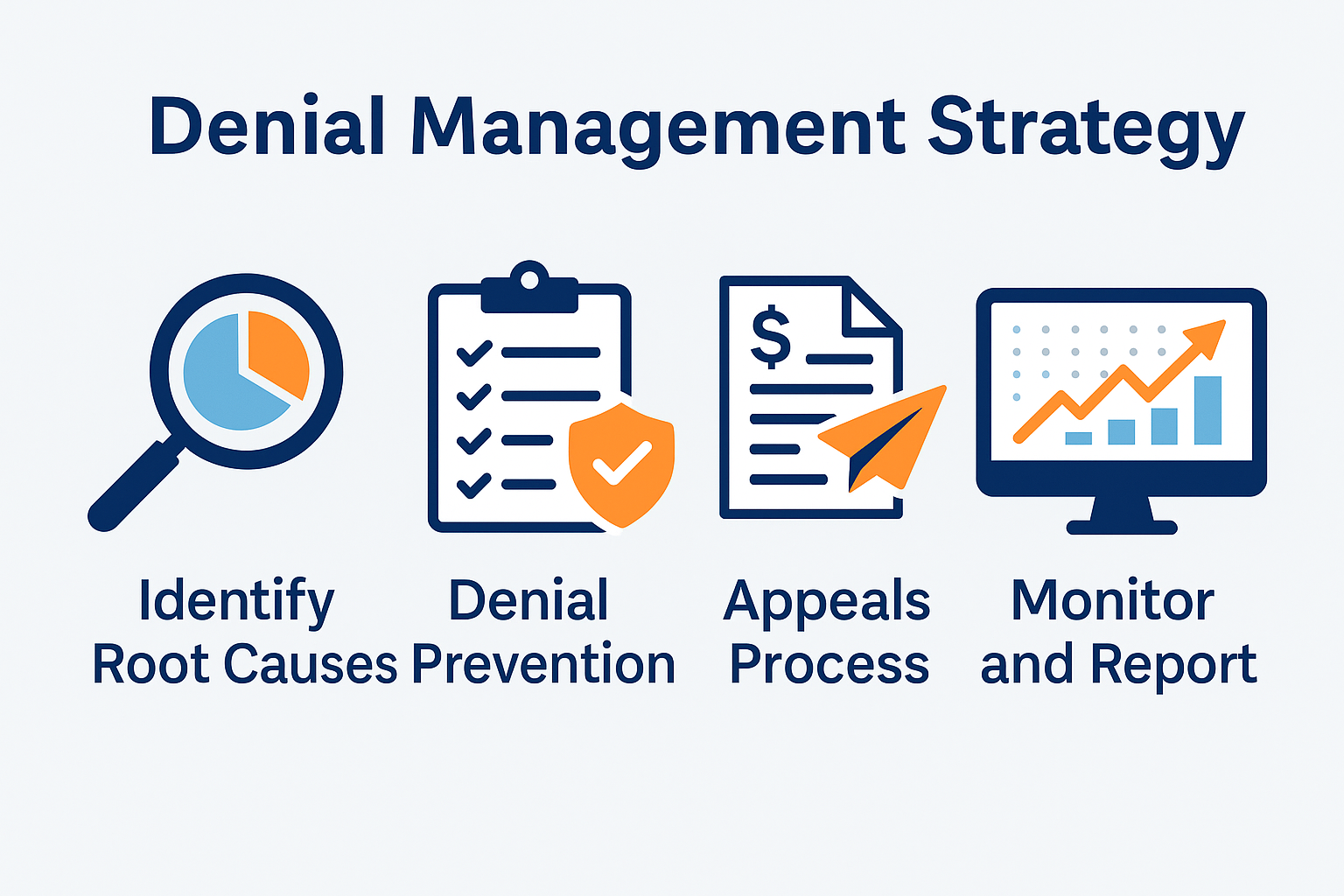
Building an Effective Denials Management Strategy
Introduction: Why Denials Management Defines Financial Performance In healthcare revenue cycle management, few metrics impact cash flow as directly as denial rate. Every denied claim delays revenue, increases labor cost, and creates administrative friction. Yet many organizations still treat denials…
-
How AI and Analytics Are Transforming Medical Billing
Introduction: From Manual Billing to Intelligent Revenue Cycles Healthcare organizations are navigating increasing payer complexity, staffing shortages, and margin pressure. Traditional billing processes—manual coding, delayed claim edits, and reactive denial management—are no longer sustainable. Artificial intelligence (AI) and analytics now…

-
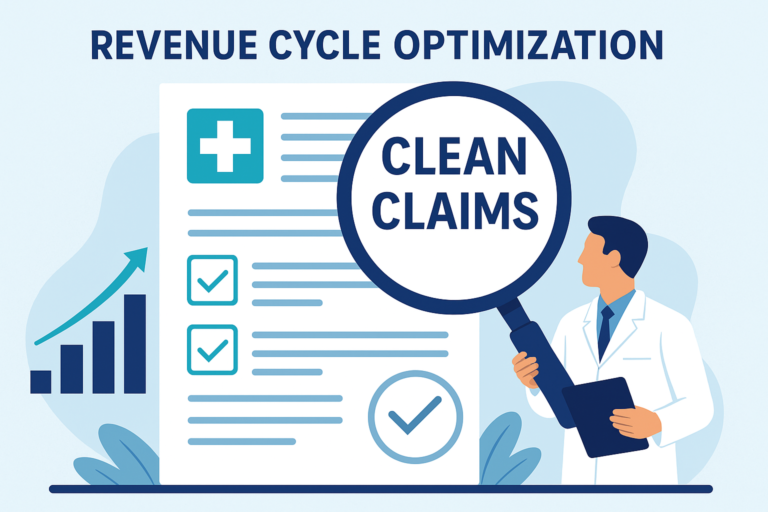
Why Clean-Claim Rate Matters in Revenue Cycle Optimization
Introduction: The First Step Toward Predictable Cash Flow In healthcare revenue cycle management, the clean-claim rate is more than a metric — it’s a leading indicator of operational excellence. A clean claim is one that passes payer edits and processes…
Latest Posts


Categories
- Analytics & KPIs (4)
- Billing & Collections (2)
- CFO's Corner (4)
- Credentialing (1)
- Denials & A/R (1)
- Executive Coaching (1)
- Patient Collections (1)
- Payer Enrollment (1)
- RCM (5)
Tags
Accounts Receivable (1) AI (2) Analytics (3) Appeals Process (1) Cash flow (1) Claim Process (1) Claim Rate (1) Collection Rate (1) Credentialing (1) Denial Rate (2) Denials Management (2) DSO (1) Governance (1) KPIs (5) Medical Billing (1) Metrics (1) Optimization (1) Patient Collections (2) Payer Enrollment (1) RCM (5) RCM KPI (1) Workflow automation (1)